
In 1971, I was married, father of a baby girl, and a full-time student at William & Mary in Williamsburg, Virginia. In need of a job to support my new family, I first applied for a job waiting tables at the taverns of Colonial Williamsburg. Tourists flocked to these restaurants–King’s Arms, Chowning’s Tavern, and others–and the waiters reportedly made good money. But they turned me down. Why? Longhairs need not apply.
At the time, we lived west of town off Richmond Road, walking distance from Benson-Phillips, a building materials plant. They had an opening for a laborer, so I applied and got the job. The plant manager, Don, was willing to schedule my hours around my classes.
Benson-Phillips supplied brick, sheetrock, mortar, and other materials to builders in the area, but its primary business was ready-mix concrete. Between the work on I-64–still under construction between Richmond and Newport News–construction at William & Mary, and local contractors, the fleet of eight concrete mixers had a steady flow of orders to deliver.
I plugged away on the bottom rung of the crew for a few months, sweeping out the warehouse, riding along on non-concrete deliveries to unload materials, and occasionally driving the fork lift. I soon graduated to driving the massive front-end loader, getting a kid’s thrill out of moving gravel and sand around the yard in a full-scale Tonka toy.
Then one day the dispatcher, an ill-tempered redneck who drove a puke-colored Ford Maverick, quit. Don needed a replacement to take orders over the phone and send the drivers out on deliveries. He offered me the job. It meant a raise and working inside the air-conditioned office, so I accepted.
In my first week as dispatcher, things were going smoothly. But late that Thursday afternoon, Clarence, one of the ready-mix drivers, came into the office. He’d just returned from a delivery.
“C’mere,” he said, nodding to the end of the counter where I worked. “Here’s your cut,” he said, slipping me a crumpled 20-dollar bill.
“My cut of what?”
“The load I just took out,” said Clarence. He grinned as he looked around to make sure no one was listening.
“I don’t get it.”
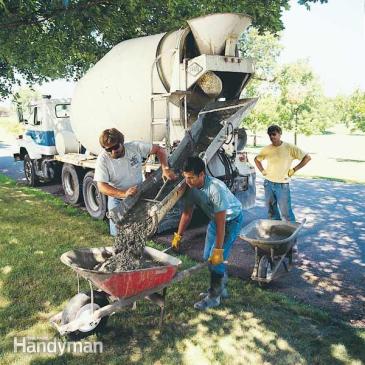
“It’s simple, man.” Now he was getting impatient with the not-so-smart college boy. “You wrote up the order for two yards, see, but Henry loaded the truck full–eight yards’ worth. I delivered the two yards, then I took the rest to a guy putting in a driveway. He paid 10 dollars a yard. That’s sixty bucks, and you, me, and Henry split it three ways.” Henry was the “batcher,” the guy who manned the booth under the towers full of sand, gravel, cement, and water, and pulled levers to load the right amount of each into the trucks’ mixers. The going rate for ready-mix concrete in 1971 was $20 a yard, so $10 a yard was, yes, a steal.
Who knew that becoming Benson-Phillips’ dispatcher made me a partner in a black-market concrete scam? And a lucrative one at that. My $20 take in 1971 would be worth almost $120 today. That’s a lot of groceries.
“Uh, okay, thanks,” I mumbled, pocketing the twenty.
“No problem,” said Clarence. He looked at me warily as if to say, “You’re not going to screw this up for us are you?”
My crisis of conscience didn’t last long. I never seriously considered blowing the whistle on Clarence, Henry, and their co-conspirators. But I also knew I didn’t want to join their crime ring. So I returned the twenty to Clarence with a promise that I wouldn’t rat them out. Yes, I had visions of my body turning up in the James River wearing–what else?–concrete galoshes. And watching fully loaded ready-mix trucks leave the yard to deliver one- or two-yard orders made me nervous. So as soon as I could, I resolved the dilemma by quitting to take a job as the night auditor at the nearby Ramada Inn. Thus ended my brief career as a concrete black marketeer.
 : Winter, 1967
 finncandenza