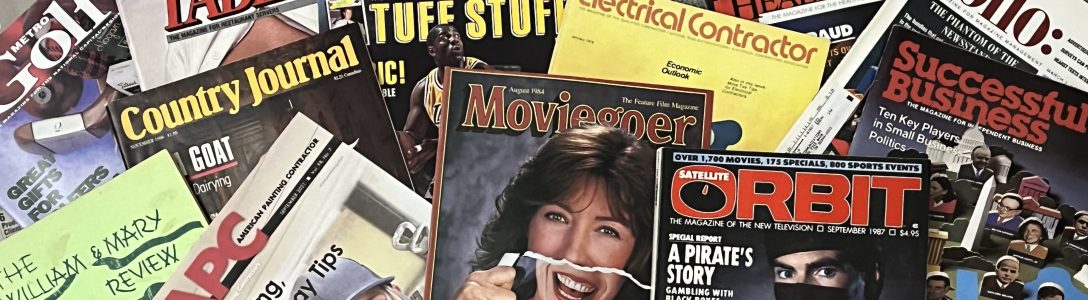
Fast forward to 1978. After starting my career working for association magazines like Electrical Contractor, I found an opportunity at a “real” publishing operation, one that was solely devoted to the magazine business. I took a job as an editor at 13-30 Corp., a publishing company in Knoxville, Tennessee.
I started as an associate editor on Successful Business, a quarterly magazine for small business owners. 13-30 was in the custom publishing business, contracting with Fortune 500 companies that wanted to produce single-advertiser magazines to reach niche audiences. In the case of Successful Business, the sponsor was Control Data, a now-defunct mainframe computer manufacturer.
Unfortunately, Control Data did not renew its contract and Successful Business bit the dust in 1979. Fortunately, 13-30 had signed Xerox as a client, and I was reassigned to edit its magazine, The Best of Business. Then along came a deal with Johnson & Johnson for a series of magazines for new parents. Soon I was leading the editorial team handling both projects.
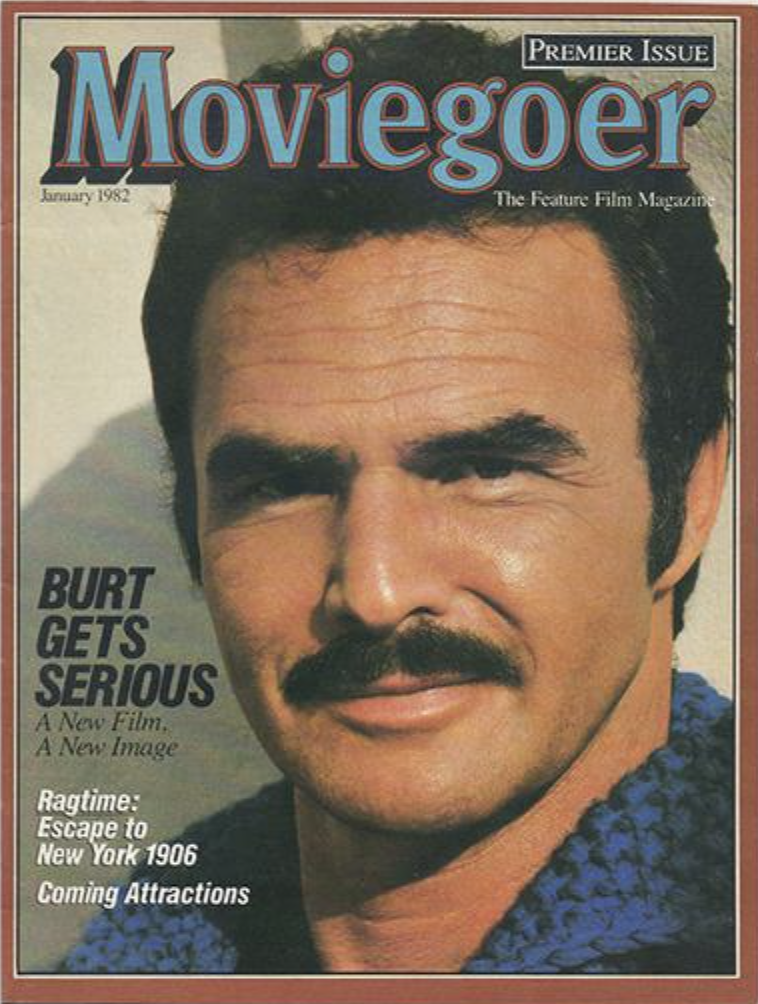
But the real excitement started in 1981 when 13-30 landed a contract with R.J. Reynolds Tobacco to produce several publications, including a movie magazine for young adults. Despite my lack of experience in entertainment media, my group got the plum assignment to create Moviegoer: The Feature Film Magazine.
We were determined to make Moviegoer as appealing to readers as any national publication covering the movies. To succeed, we had to line up original interviews and photo shoots with A-list stars. That was a tall order for a magazine based in Knoxville, Tennessee, but we had two aces up our sleeves. First, the owners of 13-30, Phil Moffitt and Chris Whittle, had put the company on the map in 1979 when they bought Esquire magazine. And with that acquisition, 13-30 gained an ally in Lee Eisenberg, the longtime Esquire editor. He helped conceive the format of Moviegoer and introduced us to the publicists whose big-name clients we needed to feature on our cover. Second, our magazine’s distribution made it catnip to people in the business of promoting films. Every month, one million copies of Moviegoer would be available free in movie theater lobbies nationwide. Who is most likely to buy a ticket to a new movie? People who already go to the movies.
With a launch date of December 1981, we began working in July to line up our first cover subjects. Armed with nothing but a cover mockup and a smile, I flew to Los Angeles to call on the studio publicity heads. My date book for July 20 and 21 shows meetings with Disney, MGM, 20th Century Fox, and Orion. The first three showed polite interest, but didn’t offer up any stars. So as I drove to my last appointment, a meeting with Lloyd Leipzig, Orion’s head of publicity, I had no heavyweight lined up for the first cover. More than a little anxious, I sat down with Leipzig and made my pitch. His eyes lit up when I said we would be putting one million copies of every issue in theaters.
“How would you like to have Burt Reynolds on the cover of your first issue?” Leipzig asked.
Talk about a no-brainer. One of the top box office stars of the ’70s (second only to Robert Redford), Reynolds was still riding high in 1981. Smokey and the Bandit II did big business the summer before, and another blockbuster, The Cannonball Run, had just hit theaters in June. Even better, the timing was perfect. Reynolds’ next movie, Sharky’s Machine, would debut in mid-December. It was his third effort as both star and director, and Reynolds was hoping to prove that he could still excel in a dramatic role as he had in Deliverance in 1972.
“I’d love it!” I replied. He had me at “Burt.”
So, with Burt Reynolds confirmed for the premier issue, I caught my flight back to Knoxville and began my stint as a small cog in Hollywood’s star-making machinery.
Next: The Time I Pissed Off Roy Scheider
 finncandenza