
It was a perfectly reasonable question: Why on earth would someone quit a fine job at a top association magazine in D.C., sell his home, and relocate with his wife and two kids almost 500 miles to Knoxville, Tennessee? My answer: For the chance to work at 13-30 Corp., of course! When I told my family, friends, and colleagues I was making this move back in 1978, they all asked, “What the heck is 13-30?”
I had wondered the same thing in 1977 when I read in Advertising Age that the owners of this mysterious 13-30 Corp. had sold 50 percent of the business to the Bonnier Magazine Group of Sweden. The following May, 13-30 made news again when it flew all 55 staffers to Stockholm to meet the company’s new partners. I just had to learn more about 13-30. (The press coverage cleared up one mystery: The name, 13-30, referred to the target audience for the company’s earliest publications, students and young adults aged 13 to 30.)
During my time at Electrical Contractor magazine, I was constantly checking the media trades, on the lookout for the next opportunity to advance my career. I hoped to find a job with a company where publishing was its sole focus, not a secondary operation as it was at trade groups like the National Electrical Contractors Association (NECA). Most ambitious people eager to work in magazines would move to New York City, the heart of the media industry. But I couldn’t see how I could afford to relocate to an even pricier city than D.C. and hope to find a decent place on a managing editor’s salary.
It so happened that my wife’s sister and her family had relocated from New Jersey to Cookeville, Tennessee, 90 minutes west of Knoxville. Wouldn’t it be nice, we thought, if I could land a job at 13-30 in a place where housing was much more affordable and my wife’s family would be a short drive away down I-40?
So when I saw a posting for an associate editor’s job at 13-30 on Successful Business, a new magazine for small businesses, I was quick to fire off my resume. No, I didn’t have experience at a business magazine, but most of Electrical Contractor‘s readers were small companies, I reasoned. Apparently, the powers that be at 13-30 agreed with that logic. In short order, I was invited to meet with the top editor in . . . New York?
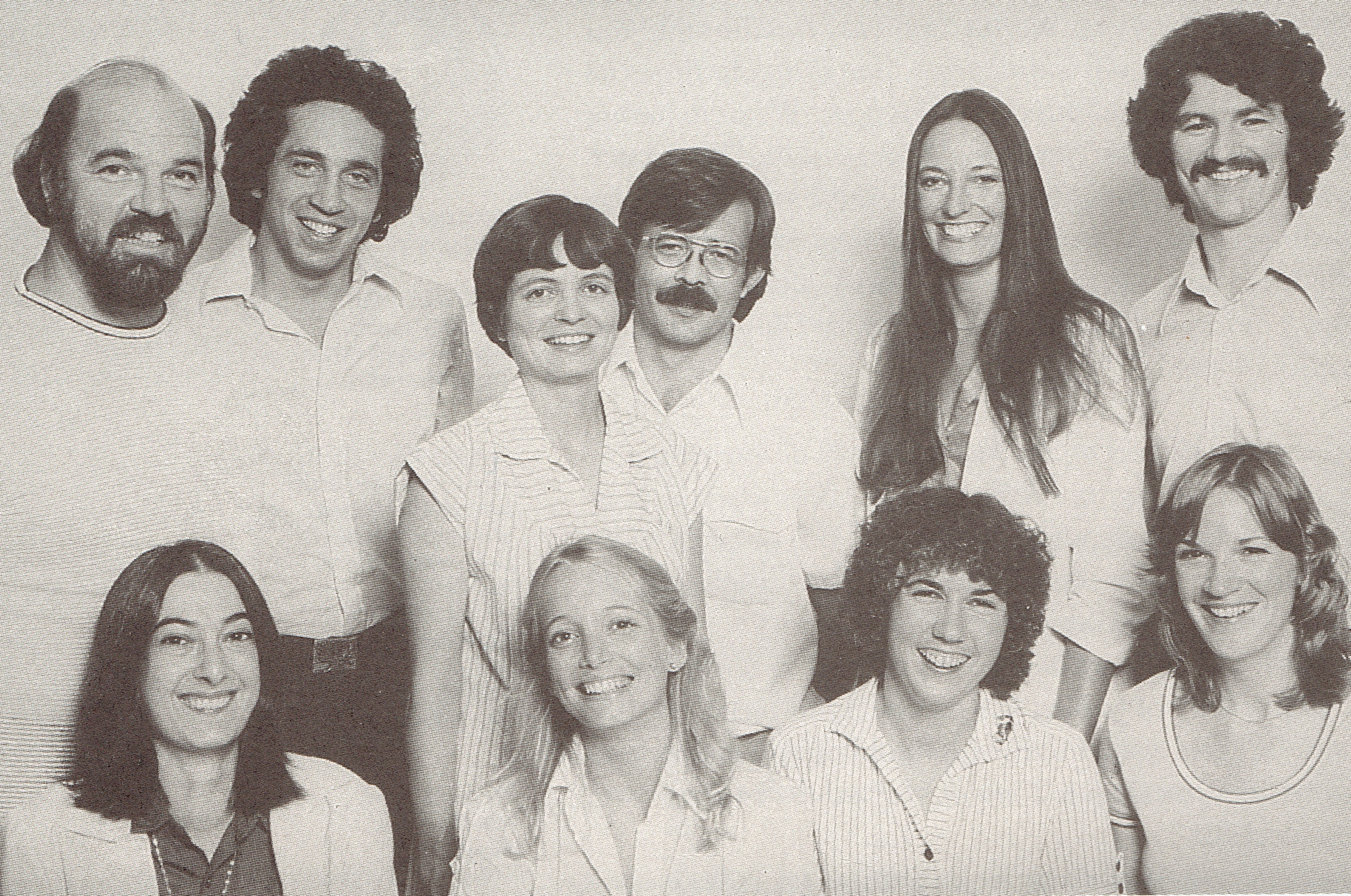
Yes, New York. 13-30 kept an apartment in Manhattan where the advertising sales staff stayed when they were pitching advertisers in the Big Apple. So I flew to New York and met with Laura Eshbaugh. The interview went well, and we agreed that I would make the trip to Knoxville for an audience with the editor-in-chief and co-owner, Phil Moffitt. My wife and I decided to combine the trip with a family visit, thus providing a cover story for taking a few days off from work.
When I arrived for my interview at 13-30’s headquarters in downtown Knoxville, one thing stood out. Actually, two things. There in the parking lot, sitting side-by-side, were two brand-new Porsche 911 Targas, one burgundy and one green. I soon learned that these beauties belonged to 13-30’s co-owners, Moffitt and Chris Whittle. Presumably, when two young men (Moffitt was 32; Whittle, 31) come into some money from selling half of their company, that’s what they do. They buy matching Porsches.
Clearly, Moffitt and Whittle were movers and shakers in these parts. They were both elected student body president at the University of Tennessee, Knoxville. In 1972, they founded 13-30 with three other UT alumni and published Knoxville in a Nutshell, a guide to the city for students. Editions of Nutshell for other college towns quickly followed, as well as magazines for high school seniors sponsored by the U.S. Army and a photography guide from Nikon. Successful Business was the company’s first publication for business owners, underwritten by Control Data Corporation, a computer manufacturer.
If I needed any more proof that Moffitt and Whittle were power players, I got it on my way to the editor-in-chief’s office. There in the office next door was the Republican candidate for governor of Tennessee, Lamar Alexander. He was borrowing office space at 13-30 during his 1978 campaign, which he won that November.
After that introduction, Moffitt and I sat down in his corner office to talk. I don’t remember anything about the conversation except the way it ended. He looked me in the eye and said, “Frank, I think if you come to work with us, you could become a real star.”
The following week, the job offer came through and I accepted right away. After all, who doesn’t want to be a star?
 finncandenza
Curious. In your opinion, did you become a star? I think you did!
As did you, Wayne!
Thx for the kind word.
I