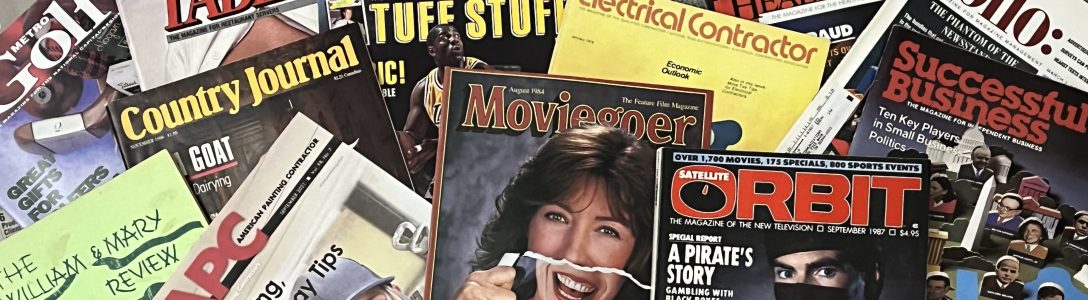
Left a Good Job in the City

It was a perfectly reasonable question: Why on earth would someone quit a fine job at a top association magazine in D.C., sell his home, and relocate with his wife and two kids almost 500 miles to Knoxville, Tennessee? My answer: For the chance to work at 13-30 Corp., of course! When I told my family, friends, and colleagues I was making this move back in 1978, they all asked, “What the heck is 13-30?”

I had wondered the same thing in 1977 when I read in Advertising Age that the owners of this mysterious 13-30 Corp. had sold 50 percent of the business to the Bonnier Magazine Group of Sweden. The following May, 13-30 made news again when it flew all 55 staffers to Stockholm to meet the company’s new partners. I just had to learn more about 13-30. (The press coverage cleared up one mystery: The name, 13-30, referred to the target audience for the company’s earliest publications, students and young adults aged 13 to 30.)

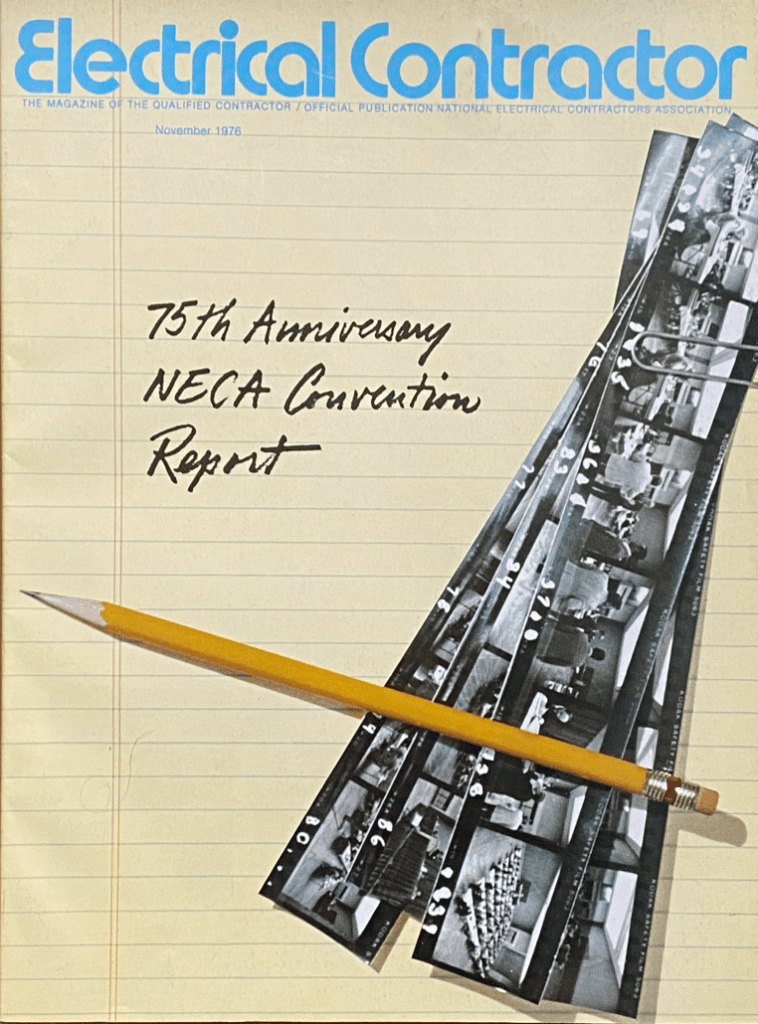
During my time at Electrical Contractor magazine, I was constantly checking the media trades, on the lookout for the next opportunity to advance my career. I hoped to find a job with a company where publishing was its sole focus, not a secondary operation as it was at trade groups like the National Electrical Contractors Association (NECA). Most ambitious people eager to work in magazines would move to New York City, the heart of the media industry. But I couldn’t see how I could afford to relocate to an even pricier city than D.C. and hope to find a decent place on a managing editor’s salary.

It so happened that my wife’s sister and her family had relocated from New Jersey to Cookeville, Tennessee, 90 minutes west of Knoxville. Wouldn’t it be nice, we thought, if I could land a job at 13-30 in a place where housing was much more affordable and my wife’s family would be a short drive away down I-40?

So when I saw a posting for an associate editor’s job at 13-30 on Successful Business, a new magazine for small businesses, I was quick to fire off my resume. No, I didn’t have experience at a business magazine, but most of Electrical Contractor‘s readers were small companies, I reasoned. Apparently, the powers that be at 13-30 agreed with that logic. In short order, I was invited to meet with the top editor in . . . New York?
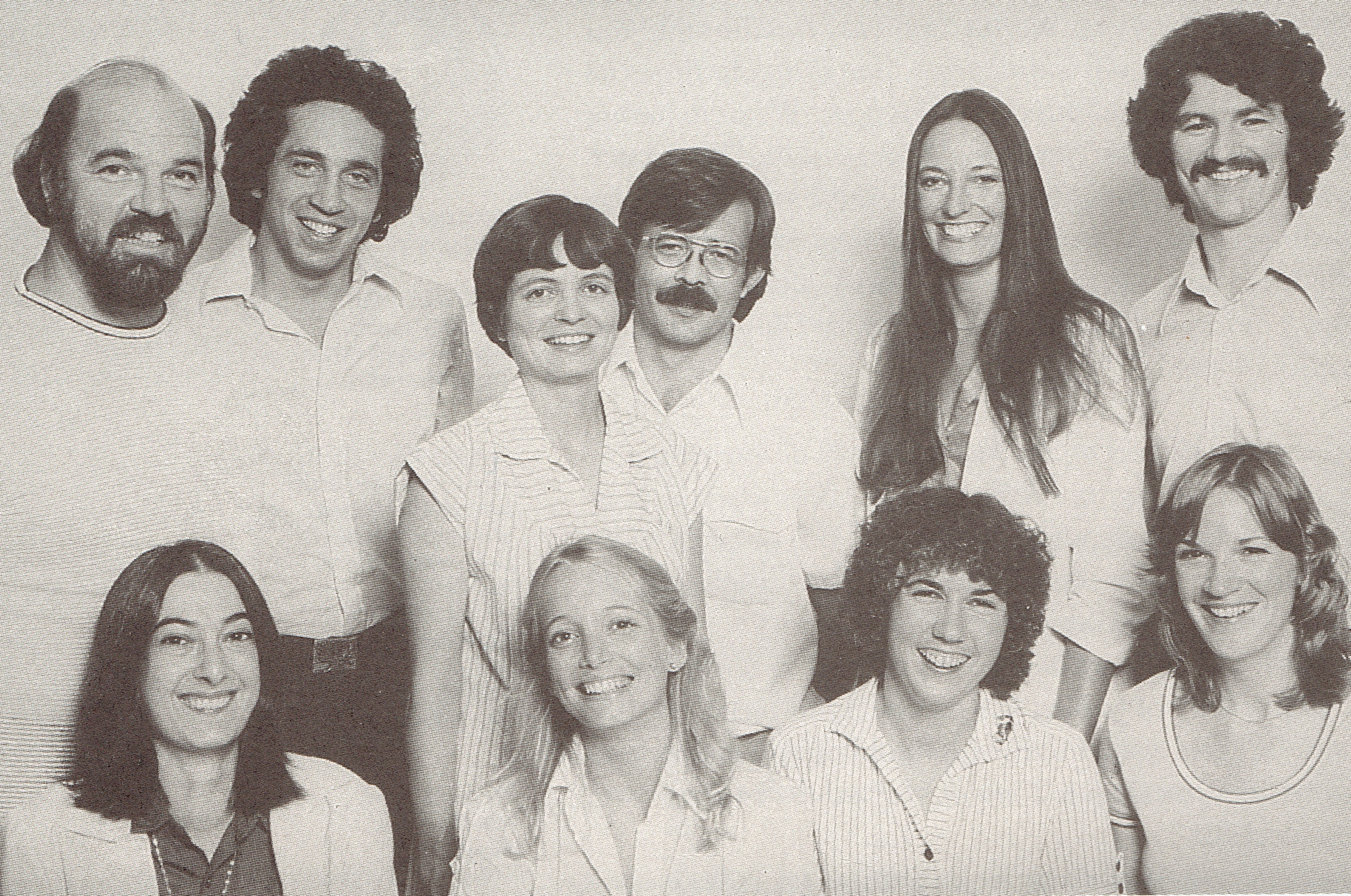
The Successful Business staff, 1979. Front row, from left: Lisa Akchin, Cindy Prince, Connie Jones, and Cindy Albiston. Back row, from left: Neal McPheeters, Michael Kranish, Laura Eshbaugh, Bill Shultz, Shelley Williams, and Frank Finn

Yes, New York. 13-30 kept an apartment in Manhattan where the advertising sales staff stayed when they were pitching advertisers in the Big Apple. So I flew to New York and met with Laura Eshbaugh. The interview went well, and we agreed that I would make the trip to Knoxville for an audience with the editor-in-chief and co-owner, Phil Moffitt. My wife and I decided to combine the trip with a family visit, thus providing a cover story for taking a few days off from work.

When I arrived for my interview at 13-30’s headquarters in downtown Knoxville, one thing stood out. Actually, two things. There in the parking lot, sitting side-by-side, were two brand-new Porsche 911 Targas, one burgundy and one green. I soon learned that these beauties belonged to 13-30’s co-owners, Moffitt and Chris Whittle. Presumably, when two young men (Moffitt was 32; Whittle, 31) come into some money from selling half of their company, that’s what they do. They buy matching Porsches.

Clearly, Moffitt and Whittle were movers and shakers in these parts. They were both elected student body president at the University of Tennessee, Knoxville. In 1972, they founded 13-30 with three other UT alumni and published Knoxville in a Nutshell, a guide to the city for students. Editions of Nutshell for other college towns quickly followed, as well as magazines for high school seniors sponsored by the U.S. Army and a photography guide from Nikon. Successful Business was the company’s first publication for business owners, underwritten by Control Data Corporation, a computer manufacturer.

If I needed any more proof that Moffitt and Whittle were power players, I got it on my way to the editor-in-chief’s office. There in the office next door was the Republican candidate for governor of Tennessee, Lamar Alexander. He was borrowing office space at 13-30 during his 1978 campaign, which he won that November.

After that introduction, Moffitt and I sat down in his corner office to talk. I don’t remember anything about the conversation except the way it ended. He looked me in the eye and said, “Frank, I think if you come to work with us, you could become a real star.”

The following week, the job offer came through and I accepted right away. After all, who doesn’t want to be a star?
The Case of the Phony Autograph

[NOTE: This post has been updated to correct several errors. Thanks to my colleagues, Larry Canale and Keith Gentili, for correcting the record.]

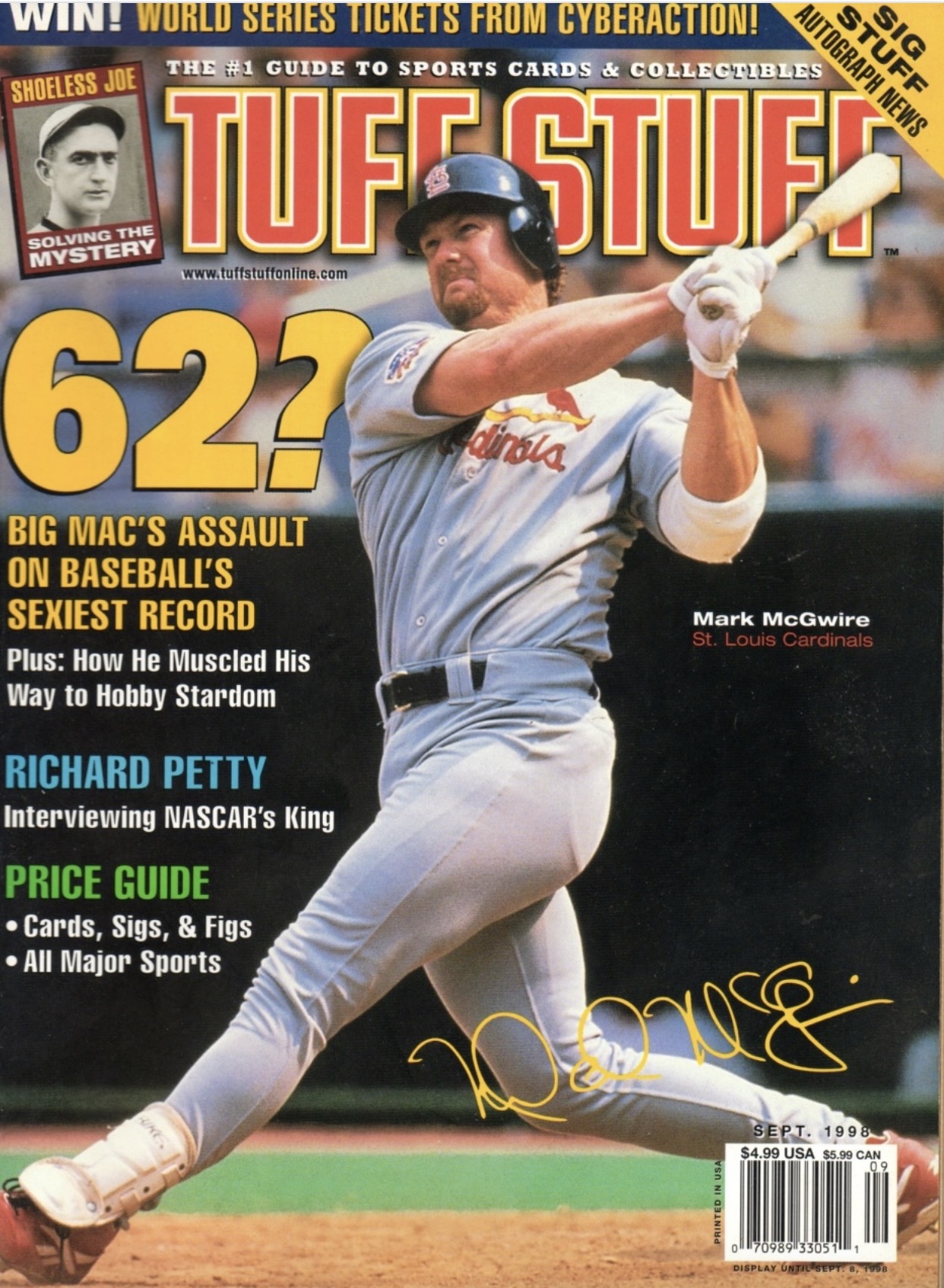
The September 1998 cover of Tuff Stuff magazine featured St. Louis Cardinals slugger Mark McGwire in the middle of his record-breaking season.

For a time in the 1990s, I was the publisher of Tuff Stuff, a magazine for collectors of sports trading cards and memorabilia. (In the collectibles hobby, “tuff stuff” is the term for a rare find.) Each year, we sent a large contingent to the biggest gathering of sports collectors in the U.S., a show called “The National.” The event brought together thousands of hobbyists, hundreds of trading card and memorabilia dealers, and all the major card companies from Topps to Upper Deck.

The 1998 National was held in Chicago that summer. Tuff Stuff rented a large booth in a prime location. We planned to distribute copies of our September issue featuring Mark McGwire on the cover. The St. Louis Cardinals slugger was bashing his way to a record-breaking 70 home runs that season. 

For each sports star we featured on our cover, we printed a facsimile of his autograph. So there on the cover of Tuff Stuff was McGwire’s autograph.

                  On the opening day of the National, I was standing in our booth when a middle-aged man in his forties approached and introduced himself.

                  “I’m Gary Brison,” he said. “I’m a memorabilia dealer and I also represent Mark McGuire to the sports collectibles industry.” As he presented his card, I half expected him to say how much he liked our cover. He did not. Instead, he dropped a bombshell.

The autograph on the cover of your magazine is a fake.”

McGwire himself had marked up a copy of our cover, signing it to show what an authentic autograph looked like.

                  “I’m here to tell you that the autograph on the cover of your magazine is a fake,” he said. “You are misleading collectors as to what a genuine Mark McGwire autograph looks like, so my client insists that you remove it from circulation.” Brison had seen McGwire the day before and showed me a copy of the cover that the slugger himself had marked up. There was his signature in bold black ink. “This is the real one,” he’d written above his autograph with arrows pointing to it. Below that, McGwire had circled the facsimile and written, “This is not my autograph.” To cap it off, he had written “This is BAD stuff.” Ouch!

                  I don’t remember my exact words, but I asked Gary to give me time to consult with my team. “Come back in an hour,” I said.

                  I huddled with the editors and started asking questions. Where did we get the McGwire autograph? Normally, we obtained samples from reputable collectibles dealers who trade in autographed memorabilia. That was how we sourced the now-questionable McGwire signature. 

                  What about Gary? Was he for real? I didn’t know him, but we confirmed with other industry people that he was, in fact, McGwire’s collectibles representative. 

                  What about the autograph? Was it really a fake? The dealer we got it from was reputable, my staff said. In the end, I decided that was irrelevant. We couldn’t very well challenge Gary’s word that the facsimile was a phony, especially when McGwire himself had said so. We had no choice but to accept the claim.

                  But when it came to removing the issue from circulation, that was flat out impossible. The September Tuff Stuff had already been mailed to subscribers. It had shipped to newsstands nationwide, and copies were on the way to hobby shops, too. The only copies still under our control were the ones we were handing out at the National.

                  When Gary returned an hour later, I explained why we couldn’t take the magazine out of circulation. But I laid out the plan my team had come up with: First, we would cross out McGwire’s autograph on the covers off the issues we were handing out at the National. Second, we would insert a press release in each copy alerting readers at the show about the error. Third, we would print an editorial correction in the October issue about the problem. And finally, we would distribute that same press release to reporters covering the National to publicize the fake autograph on our cover.

                  Fortunately, Gary proved to be a reasonable man. He accepted our plan.

                  While the Tuff Stuff staff began crossing out McGwire’s autograph on copies of the magazine, I hustled to the press center to write the news release. In short order, people receiving the issue at the show got the release, and every reporter covering the National had a copy. Crisis averted.  

                  The next day, a silver lining to a decidedly cloudy situation emerged. USA Today ran a story on the phony autograph. And the old saying that there is no such thing as bad publicity? It turned out to be true. Our mistake made the McGwire issue an instant collector’s item. Sales through newsstands and hobby shops soared; the September 1998 Tuff Stuff became the best-selling issue of the year. 

                  Ironic postscript: Turns out, during his record-breaking season, McGwire was taking androstenedione, an over-the-counter muscle enhancement product. It had been banned by the NFL, the World Anti-Doping Agency and the International Olympic Committee, but the substance was not prohibited by Major League Baseball at the time. In 2010, McGwire admitted that he had been using steroids on and off for 10 years, although he claimed he took them for his health, not to help him hit home runs. 

                  McGwire retired in 2001 and became eligible for election to the Baseball Hall of Fame in 2007.  But, tarnished by his steroid use, he failed to win selection to Cooperstown 10 years in a row. Evidently, the baseball writers who vote for Hall-of-Famers concluded that, just like the autograph on that cover of Tuff Stuff, McGwire was a fake.

That Time I Pissed Off Roy Scheider

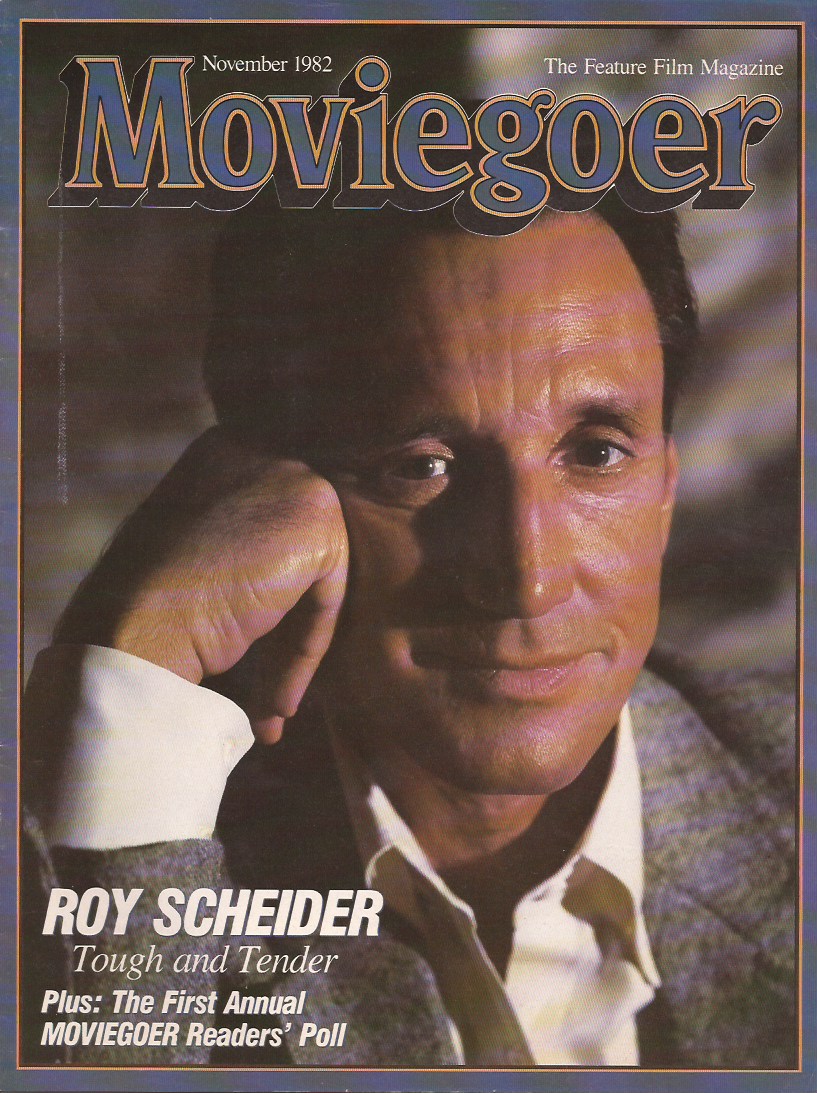
Thanks to first-rate photographers, Moviegoer cover subjects always looked absolutely fabulous. [Photo: Lance Staedler]

I didn’t go out of my way to piss off Roy Scheider, the star of Jaws, the man who uttered the immortal line, “You’re gonna need a bigger boat.” Who in their right mind would set out to anger the one-time boxer and two-time Academy Award nominee (Best Supporting Actor in 1971 for The French Connection and Best Actor in 1979 for All That Jazz)? But you have to understand. I had no choice.

It was the summer of 1982. I was at the beach with my family, enjoying time away from my job at 13-30 Corp. in Knoxville, Tennessee. It had been a hectic 12 months since I landed the assignment to lead the team producing Moviegoer, a monthly film magazine. But it was about to get more hectic. The phone at the beach house rang. Lisa, one of the Moviegoer editors, was calling. “We have to pull the Roy Scheider cover,” she said.

My first year heading up the Moviegoer staff had been a crash course in the workings of the Hollywood publicity machine. To land established movie stars for your cover, you had to pitch their publicists, the gatekeepers who manage their media exposure. These publicists made you jump through hoops before they would recommend your magazine to their clients.

Hoop #1: How much exposure will my client get? Print media couldn’t–and still can’t–match the millions of “eyeballs” delivered by TV shows like Today; Good Morning, America; Entertainment Tonight; and 60 Minutes. Fortunately, we distributed one million copies of Moviegoer to theaters in the top 100 markets every month. Hoop #1: Check.

Hoop #2: Will your coverage be “friendly” to my client? Contrary to the old saying, there is such a thing as bad press. Few movie stars are willing to sit down for an interview and be peppered with questions about their love life or a recent DUI. At Moviegoer, we assured the publicists, we focused on the work–the art of filmmaking. And the journalists we hired were pros who wrote for leading magazines and newspapers, not gossip sheets. Check.

Hoop #3: Will you make my client look good? A movie star’s face is his/her fortune. Before they will sit for a photo session, they need to know that the person behind the camera will capture them at their best. Moviegoer only worked with the top photographers in New York and L.A., and our photo editor or art director (or both) attended the shoots to make sure we got outstanding portraits. Check.

Hoop #4: Have you featured other stars of my client’s wattage on your cover? Actors want to know that they are in good company when they agree to appear on a TV show or a magazine cover. In the case of Moviegoer, our first eight cover subjects in 1982 were:

  • January – Burt Reynolds
  • February – Alan Alda
  • March – Harrison Ford
  • April – Michael Caine
  • May – Arnold Schwarzenegger
  • June – Rachel Ward
  • July – Jon Voight
  • August – Sylvester Stallone

The September issue with Mick Jagger on the cover was on its way to theaters and October featuring Susan Sarandon was in production. Check and double check.

Hoop #5: Is the timing right? When an actor signs to star in a movie, they agree to do publicity to promote ticket sales. And with publicity, timing is everything. The studio, the actor, and their publicists all want the TV interviews and the magazine covers to land just before their movie hits theaters. It’s all about making sure the film “opens big.” The phone call about the Scheider cover was triggered by a timing issue.

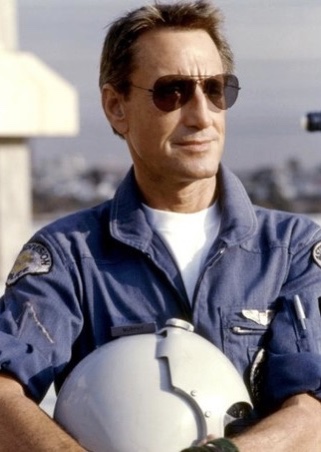
Roy Scheider in a publicity still from Blue Thunder.

Scheider and his publicist had agreed to do the Moviegoer cover with the understanding that it would appear just before the November release of Blue Thunder, an action flick featuring Scheider as a police helicopter pilot flying a high-tech chopper and battling bad guys in the skies over L.A. Our November issue was “advance dated,” meaning that the magazine would be available in theaters during October. Everything was set until director John Badham (Saturday Night Fever) ran into post-production problems with the special effects, forcing the studio to delay the film’s release until May.

So now, Scheider’s publicist had called to say we had to postpone the cover. The problem was, in late August, production of the November issue was too far along to allow a change. In the pre-digital age, to put one million copies of a magazine into hundreds of theaters nationwide in October, you had to get the materials to the printer two months in advance.

In the end, we had no choice but to tell Scheider’s publicist no. We pointed out that he had another movie coming out in December–Still of the Night–in which he co-starred with Meryl Streep, fresh off her Academy Award-winning performance in Kramer vs. Kramer. Unfortunately, Scheider hated Still of the Night and swore he would do nothing to promote it. (He wasn’t alone. Years later, when Streep was asked if she hated any of her films, she answered, “Still of the Night.”)

Were Scheider and his publicist upset with our answer? Oh, yes–big time. The publicist said, “None of my clients will ever again appear in Moviegoer.” Fortunately, by late 1982, our magazine was in high demand among other publicity firms as a great vehicle for promoting their clients and their movies. We never had any trouble getting A-list actors to do the cover.

Still, I regret that I had to piss off Roy Scheider. If I run into him in the hereafter (he died in 2008), I will offer my hand and say, “Sorry about that Moviegoer cover, Mr. Scheider”–and then duck.

[Thanks to the James McKairnes Archives for the image of the November 1982 cover of Moviegoer.]

A Cog in the Star-Making Machinery

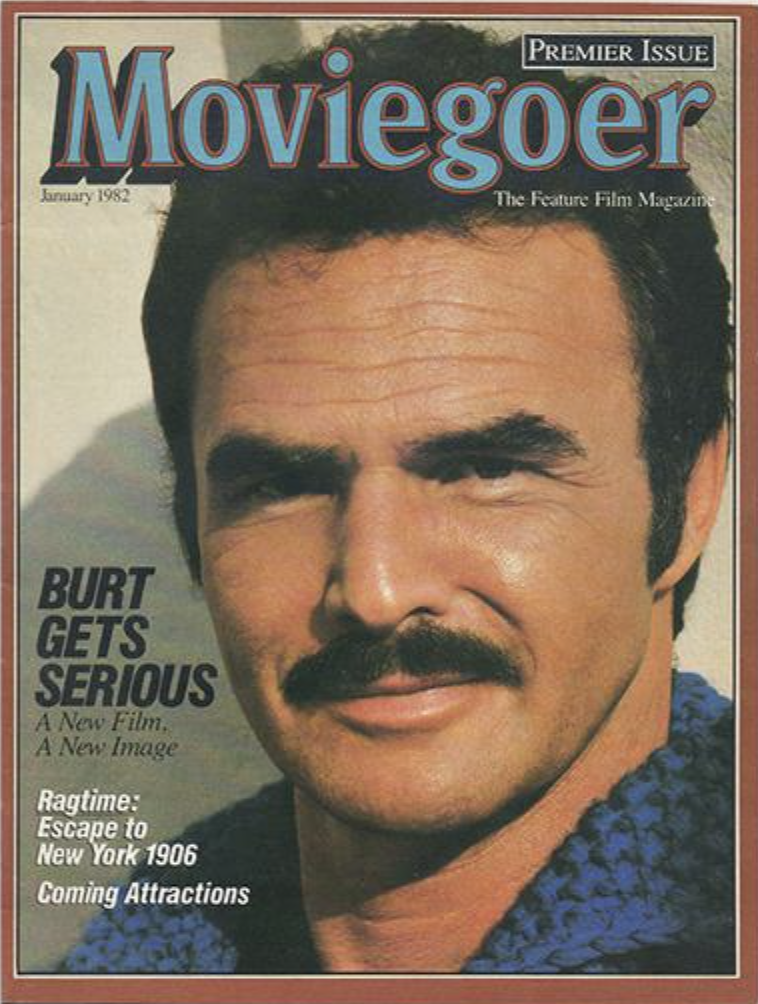
The premier issue of Moviegoer magazine featuring Burt Reynolds appeared in December 1981.

Fast forward to 1978. After starting my career working for association magazines like Electrical Contractor, I found an opportunity at a “real” publishing operation, one that was solely devoted to the magazine business. I took a job as an editor at 13-30 Corp., a publishing company in Knoxville, Tennessee.

I started as an associate editor on Successful Business, a quarterly magazine for small business owners. 13-30 was in the custom publishing business, contracting with Fortune 500 companies that wanted to produce single-advertiser magazines to reach niche audiences. In the case of Successful Business, the sponsor was Control Data, a now-defunct mainframe computer manufacturer.

Unfortunately, Control Data did not renew its contract and Successful Business bit the dust in 1979. Fortunately, 13-30 had signed Xerox as a client, and I was reassigned to edit its magazine, The Best of Business. Then along came a deal with Johnson & Johnson for a series of magazines for new parents. Soon I was leading the editorial team handling both projects.

But the real excitement started in 1981 when 13-30 landed a contract with R.J. Reynolds Tobacco to produce several publications, including a movie magazine for young adults. Despite my lack of experience in entertainment media, my group got the plum assignment to create Moviegoer: The Feature Film Magazine.

We were determined to make Moviegoer as appealing to readers as any national publication covering the movies. To succeed, we had to line up original interviews and photo shoots with A-list stars. That was a tall order for a magazine based in Knoxville, Tennessee, but we had two aces up our sleeves. First, the owners of 13-30, Phil Moffitt and Chris Whittle, had put the company on the map in 1979 when they bought Esquire magazine. And with that acquisition, 13-30 gained an ally in Lee Eisenberg, the longtime Esquire editor. He helped conceive the format of Moviegoer and introduced us to the publicists whose big-name clients we needed to feature on our cover. Second, our magazine’s distribution made it catnip to people in the business of promoting films. Every month, one million copies of Moviegoer would be available free in movie theater lobbies nationwide. Who is most likely to buy a ticket to a new movie? People who already go to the movies.

With a launch date of December 1981, we began working in July to line up our first cover subjects. Armed with nothing but a cover mockup and a smile, I flew to Los Angeles to call on the studio publicity heads. My date book for July 20 and 21 shows meetings with Disney, MGM, 20th Century Fox, and Orion. The first three showed polite interest, but didn’t offer up any stars. So as I drove to my last appointment, a meeting with Lloyd Leipzig, Orion’s head of publicity, I had no heavyweight lined up for the first cover. More than a little anxious, I sat down with Leipzig and made my pitch. His eyes lit up when I said we would be putting one million copies of every issue in theaters.

“How would you like to have Burt Reynolds on the cover of your first issue?” Leipzig asked.

Talk about a no-brainer. One of the top box office stars of the ’70s (second only to Robert Redford), Reynolds was still riding high in 1981. Smokey and the Bandit II did big business the summer before, and another blockbuster, The Cannonball Run, had just hit theaters in June. Even better, the timing was perfect. Reynolds’ next movie, Sharky’s Machine, would debut in mid-December. It was his third effort as both star and director, and Reynolds was hoping to prove that he could still excel in a dramatic role as he had in Deliverance in 1972.

“I’d love it!” I replied. He had me at “Burt.”

So, with Burt Reynolds confirmed for the premier issue, I caught my flight back to Knoxville and began my stint as a small cog in Hollywood’s star-making machinery.

Next: The Time I Pissed Off Roy Scheider

The NECA Years – North to Alaska

“Aw, hell! Let’s just get on a plane and fly up to Nome so you can see the job first-hand!”

On assignment for Electrical Contractor magazine in 1975, I sat across from Charlie Bussell, president of Alaska Bussell Electric Co. of Anchorage. I was interviewing him about a project his company took on in Nome, restoring the electrical systems of two giant dredges operated by Alaska Gold Company. When the price of gold shot up to $195 an ounce in late 1974–a side effect of the OPEC oil embargo–dredging for gold in the sand and gravel deposits outside of Nome made economic sense for the first time since 1962. And Charlie’s company landed the contract to get the gold dredges back into operation.

Part of my job as managing editor was to travel the country, interviewing contractors for a series in the magazine called “Challenging Jobs.” On this trip, I had already flown from Washington, D.C. to Anchorage with stops to interview contractors in Denver and Seattle. Somehow, the prospect of adding a round trip to Nome and an extra day to my trip was less than appealing.

“I really need to get back,” I said, feeling decidedly un-adventurous.

“OK, suit yourself,” said Charlie, clearly disappointed.

I didn’t need to fly 500 miles to the shores of the Bering Sea to feel adventurous. I’d flown up from Seattle on an L-1011, Lockheed’s answer to the Boeing 747. On final approach to the Anchorage airport, with the waters of the Cook Inlet below, turbulence hit and the jumbo jet started sliding sideways. Suddenly, the engines roared, the plane’s nose lifted, and we climbed back into the sky.

“Sorry about that, folks,” said the captain over the PA. “The crosswinds at the end of the runway exceeded the design limits of the L-1011, so we had to abort the landing. We’ll circle for a while and try again when the winds die down.”

The crosswinds at the end of the runway exceeded the design limits of the L-1011.

After one hour in a holding pattern, the captain came back on the intercom: “Good news! The winds have dropped off some, so we’re going to give it another try.” This time, despite a scary amount of bucking and sliding sideways, we touched down safely. The relieved passengers cheered and applauded (including me). Was it a narrow escape? Close enough that a row of fire engines had lined the runway, just in case.

After a night at the Captain Cook Hotel in downtown Anchorage, I made my way to Alaska Bussell Electric’s offices. Charlie welcomed me and led the way into a conference room dominated by a glass-topped table at least four feet across.

“Like it?” he asked. “That’s a slice of the Trans-Alaska Pipeline.” The massive project to build the pipeline had started in 1969. When complete, it would carry crude oil 800 miles from Prudhoe Bay on the North Slope to Valdez, 118 miles east of Anchorage. “There’s a thriving black market for materials and equipment from the pipeline,” Charlie explained. “Welders cut sections like this, draw the map of Alaska on the side and trace the pipeline route down the middle. They turn them into tables and make a bundle.”

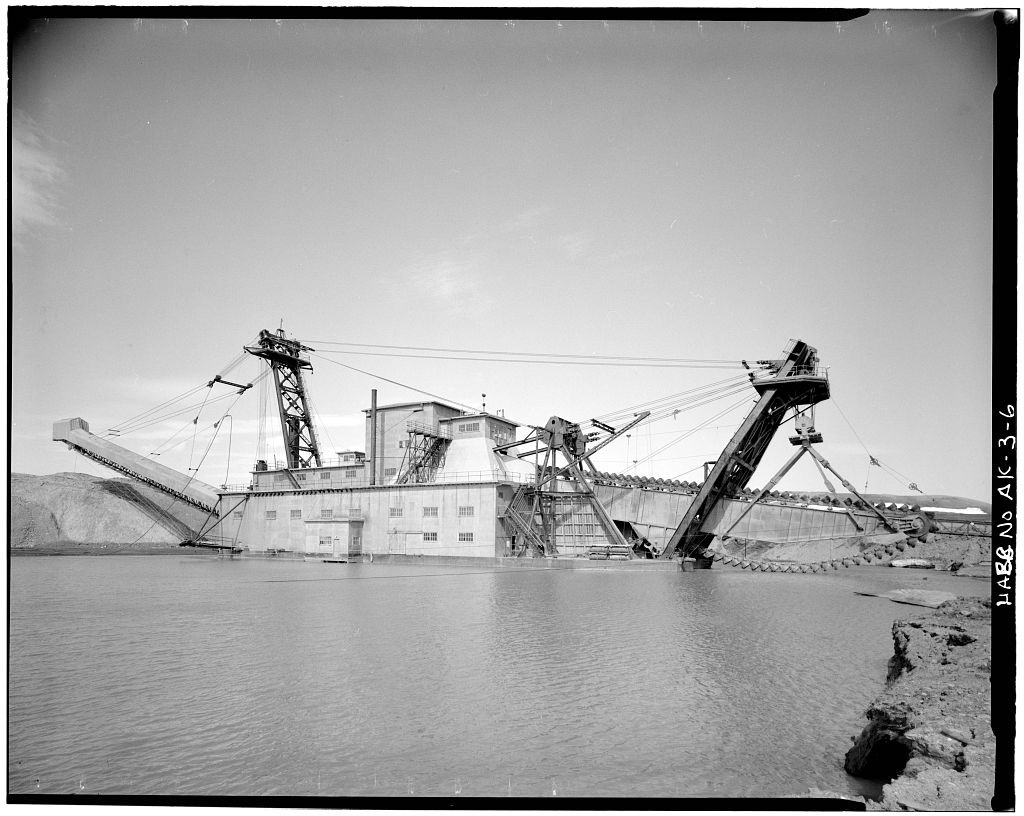
Settling in at the pipeline table, I switched on my tape recorder and Charlie began trying to help me understand the scope of the gold-dredge project. He pulled out a photo of Dredge #5, one of two he had to get running again–and fast. Originally built in 1940, it had been abandoned in the hills three miles inland from Nome. Staring at the photo of the dredge in a barren landscape, I had no way to judge the machine’s size. So Charlie recited its vital statistics: From the tip of the bucket line to the end of the conveyor, the dredge measured 535 feet, one long pass short of two football fields. The center structure was six stories high and 72 feet wide. It weighed 3,400 tons “dry” (when not processing gravel and sand). Each of the 135 buckets on the front end could dig up nine cubic feet of gravel. In short, it was huge.

Dredge #5 turned out to be in excellent condition, thanks to the lack of humidity away from the Bering Sea. Charlie’s team was able to repair every motor on board and get the machine up and running for the 1975 mining season. It operated for 117 days that year and recovered 7,791 ounces of gold worth $1.5 million ($7.4 million in today’s dollars). That came close to matching the 9,146 ounces mined in the entire state of Alaska in 1974.

Dredge #5 floating in its dredge pond three miles inland from Nome.

Dredge #6 was a different story. It had been abandoned next to a beach where the salt air and moisture corroded its electrical systems. “We’ve replaced all of the switching equipment, the load centers, the drive equipment, and the pump motors,” Charlie said. “Starting with the high-voltage switch coming on board, it’s all new.” As a result, Dredge #6 didn’t come on line until 1976.

When Charlie opened an office in Nome to oversee the dredge project, he became the only electrical contractor in town. So when the city of Nome decided to install streetlights, Alaska Bussell got the job. As they were digging holes to set the light poles in temperatures as low as 30 below zero, Charlie’s crew got a taste of the Gold Rush days.

“We had a hard time keeping the dirt,” he explained. “People were hauling it away to pan it for gold.” Turns out, Nome was built on sandy soil that had never been mined. One resident extracted an ounce and a half of gold from the post-hole dirt in front of Nome’s Gold Nugget Hotel.

Forty-five years later, do I regret not jumping at the chance to visit that wild place a stone’s throw from the Arctic Circle? You bet I do.

The NECA Years – The Interview Process

Cover of Electrical Contractor January 1978

The classified pages of The Washington Post offered up a tantalizing listing in the spring of 1975: Managing Editor at the National Electrical Contractors Association (NECA). If I could land that job and work on Electrical Contractor magazine, it would be like getting called up from the minors to play for the Yankees.

At the time, I was Manager of Communications for the National Builders Hardware Association, a much smaller trade group. Besides working on Doors & Hardware magazine, I also drafted speeches for the executive director, shot videos for chapter meetings, and wrote press releases. At NECA, I would be the number-two person on a six-person staff, focusing solely on magazine writing and editing. And Electrical Contractor was a major revenue source for the association, successfully competing for ad dollars against construction industry magazines from McGraw-Hill and other for-profit publishers.

So off went my resume, and soon I got a call to come to NECA’s headquarters to interview with Larry Osius, the editor and publisher. NECA’s offices occupied the entire top floor of the Air Rights Building in Bethesda–the 13th floor. That struck me as odd; in most office buildings, it’s customary to pretend there is no 13th floor. The elevator buttons skip straight from 12 to 14. The day of my interview, I chose not to see this as a bad omen, punched number 13, and was soon ushered in to see my prospective boss.

Larry Osius (OH-see-us) sported a crew cut and came across as a pleasant but no-nonsense fellow. He chain-smoked as he asked rapid-fire questions. Why did I want to leave NBHA? (So I could focus on magazine writing and editing, not speeches and press releases.) Had I ever done paste-up (part of the production process)? A former Associated Press reporter and editor, Osius had a newspaper man’s interviewing style. Soon, his questions veered into the personal.

“Family?”

“Yes, a wife and two kids.”

“I see you live in Falls Church.”

“Yes, we own a townhouse there off Route 7.”

“How does a 25-year-old with a wife and two kids afford a townhouse in Falls Church, Virginia?”

“My parents helped us with the down payment.”

Evidently satisfied, Osius showed me around the magazine staff’s offices, then sent me on my way. He said I’d be hearing from them.

Within a week, I got a call informing me that I’d be meeting with NECA’s executive director, Bob Higgins. Soon, I was back on the 13th floor, sitting across the desk from a gruff man who wore a sour expression as he scanned my resume. I don’t recall much of the conversation, except that Higgins quizzed me about drinking.

“Which has more alcohol? A beer, a glass of wine, or a shot of liquor?” he asked.

“I think they all have the same amount.”

“Hmmm,” he said suspiciously, one Irishman sizing up another.

Afterward, I learned that Higgins had okayed me, but there was one more hurdle to clear before NECA would offer me the job–an evaluation by an industrial psychologist. Evidently, NECA put all of its candidates for management positions through the process to insure a good fit.

“Was I a well-adjusted person who would work hard and play well with others, or a borderline psychotic?”

On the appointed day, I reported to the psychologist’s office on Wisconsin Avenue, close to the D.C. line. His assistant gave me a battery of personality tests designed to reveal whether I was a well-adjusted person who would work hard and play well with others, or a borderline psychotic. Next came a personal interview with Dr. Whomever who asked lots of personal questions about my upbringing, my marriage, and my career ambitions. A less eager person might have bristled at this invasive inquisition, but I actually enjoyed the conversation, cheerfully helping him figure out what made me tick.

Apparently, my results put me on the right side of the well-adjusted-to-psychotic scale, and I got the job. So it was goodbye Doors & Hardware, hello Electrical Contractor!

Lo, the College Traveler

In early 1972, with my graduation from William & Mary looming, one question grew more urgent by the day: How would I support myself, my wife, and our young daughter? An English Lit major,  I hoped to make a living as a writer and editor. And I had learned a few things as editor of the campus literary magazine, The William & Mary Review. Still, how was I going to find work in publishing?

My father had one answer: Apply for a federal job. By then, he had put in more than 30 years with the civil service in D.C., most of them at the IRS national office in a senior personnel role. Many of the people who had worked for him were now the heads of personnel at federal agencies all over town. So I just had to say the word and he could arrange the meetings in a heartbeat.

Somehow, I couldn’t picture myself editing a newsletter at the Department of Transportation, or writing booklets at Housing & Urban Development. While I could count on job security and decent pay on Uncle Sugar’s payroll, my ambition was to try my hand in the real publishing world, working for a magazine or a book publisher. But how could I get a foothold at those lofty companies?

1684192_orig

My ambition was to try my hand in the real publishing world, working for a magazine or a book publisher.

Enter David Clay Jenkins. Dr. Jenkins had been my freshman advisor in the English Department, and with my senior year winding down, he was now advising me on my honors thesis. And he had a career suggestion: Turns out, a former student of his now had a big job at Houghton-Mifflin, the giant textbook publishing company. And how did he get his start? As a college traveler.

what? A college traveler, it turned out, goes from campus to campus meeting with professors to pitch the latest textbooks. The goal was to get your Psychology 101 text “adopted” by the professor as required reading. It was a long way from editing Tom Wolfe, but it was a foot in the door, or so argued Dr. Jenkins.

So, in short order, I checked the classifieds in the Washington Post, where I found an ad seeking college travelers. I applied, met with the headhunter, and was soon on my way to New York City to interview with a division of Harper & Row.

I was to meet with Jack Jennings, president of Canfield Press, at Harper & Row headquarters on East 53rd Street. His newly minted division published textbooks for the burgeoning community college market, and Jack needed college travelers to get the word out. He had flown in from Canfield Press headquarters in San Francisco.

If they were out to impress me, they did. This was the big time. Harper & Row’s offices were in the heart of midtown Manhattan, right off Fifth Avenue and a stone’s throw from Rockefeller Center and Scribner’s bookstore. The cab from LaGuardia dropped me at 10 East 53rd and I navigated my way to the office where Jennings was camped out. A trim, sandy-haired Californian, he informed me that I had passed the first test just by finding him. To be successful, a college traveler has to be able to track down professors on sprawling campuses.

The rest of the hiring process flew by in a blur. By the end of 1972, I was on staff, assigned to cover community colleges in a territory that stretched from southern Pennsylvania, through Maryland, to Northern Virginia. My wife and I found a garden apartment in Gaithersburg, Maryland, a suburb of D.C. And the first item on my training agenda was the Canfield Press sales meeting in Tiburon, California, across the bay from San Francisco. My career in publishing was launched!

To be continued


Close Encounter

There was that song again, just like clockwork.

Put your hand in the hand of the man
Who stilled the water
Put your hand in the hand of the man
Who calmed the sea
Take a look at yourself
And you can look at others differently
Put your hand in the hand of the man
From Galilee

Every weekday night back in 1971, it was the same routine. As I arrived for my overnight shift as night auditor at the Ramada Inn in Williamsburg, Virginia, Smith & Wade, a local folk-rock duo who performed in the lounge, was closing their final set. And they always, always, closed with Anne Murray’s then-current hit, Put Your Hand in the Hand. 

Put your hand in the hand of the man
Who stilled the water

“Sing it everybody!” they’d shout. “Put your hand in the hand . . .”

Put your hand in the hand of the man
Who calmed the sea

“Oh brother!” I said to the guy at the front desk. I was his relief.

I set my thermos of coffee down and settled in to my duties. My friend Lyle, who turned me on to this job, was right: Being a night auditor was a sweet gig. You worked from 11 p.m. to 7 a.m., answering the phone, checking in late-arriving guests, and closing the books for the day. Most nights, you could finish by 1 a.m., lock the lobby door, and snooze until your relief showed up at 7. You actually got paid to sleep! And with those hours, I could put in a 40-hour week at the Ramada Inn, take classes at William & Mary, and still have family time with my wife and daughter.

Over in the lounge, Cabot Wade and his sidekick, Dick Smith, strummed their guitars and harmonized earnestly, putting everything they had into the chorus one last time.

Put your hand in the hand of the man
Who stilled the water
Put your hand in the hand of the man
Who calmed the sea

I didn’t care much for this soft-rock pablum. Just two years before, I had joined the trek to upstate New York for Woodstock. Anne Murray didn’t play Woodstock. So Jimi Hendrix, Led Zeppelin, Janis Joplin, and the Rolling Stones were more my speed. Still, Smith & Wade had managed to get the crowd singing and clapping along for the rousing finish.

Take a look at yourself
And you can look at others differently
Put your hand in the hand of the man
From Galilee!

The crowd hooted and applauded with gusto, then tapered off into murmurs and laughs in that haphazard way an audience does when the show’s over.

Moments later, a group of five people spilled out of the lounge into the lobby, laughing a little too hard, or so it seemed to me. In their midst was an attractive blond woman who swept into the two-story lobby like she was taking the stage. I recognized her as Glennie Wade, Cabot Wade’s wife and the up-and-coming star of the William & Mary theater department.

The group settled themselves on the sofa and chairs in the center of the lobby, below the double-decker brass chandelier. Everyone but Glennie, that is. She stood before her admirers, a wide smile lighting up her face. And then she took a deep breath and began to sing,

The butcher, the baker, the grocer, the clerk
Are secretly unhappy men because
The butcher, the baker, the grocer, the clerk
Get paid for what they do but no applause.
They’d gladly bid their dreary jobs goodbye–for anything theatrical and why? 

Cabot and Smith had had their turn. Now it was Glennie’s time to perform, belting out Ethel Merman’s showstopping Broadway anthem. Right here in the Ramada Inn lobby.

There’s NO business like SHOW business like NO business I know
Everything about it is appealing, everything that traffic will allow
Nowhere could you get that happy feeling when you are stealing that extra bow

Ethel would have been proud. I was amazed at her display of chutzpah and one-upsmanship.

Not long after, Glennie and Cabot got a divorce. She graduated from William & Mary in 1974 and went to New York to launch her acting career. And thanks to the same talent, ambition, and charisma I witnessed on display that night at the Ramada, she made it big–really big–under her given name:

Glenn Close.